

Keywords
Polyphenols
Herbal medicine
Bioactive compounds
How to Cite
Abstract
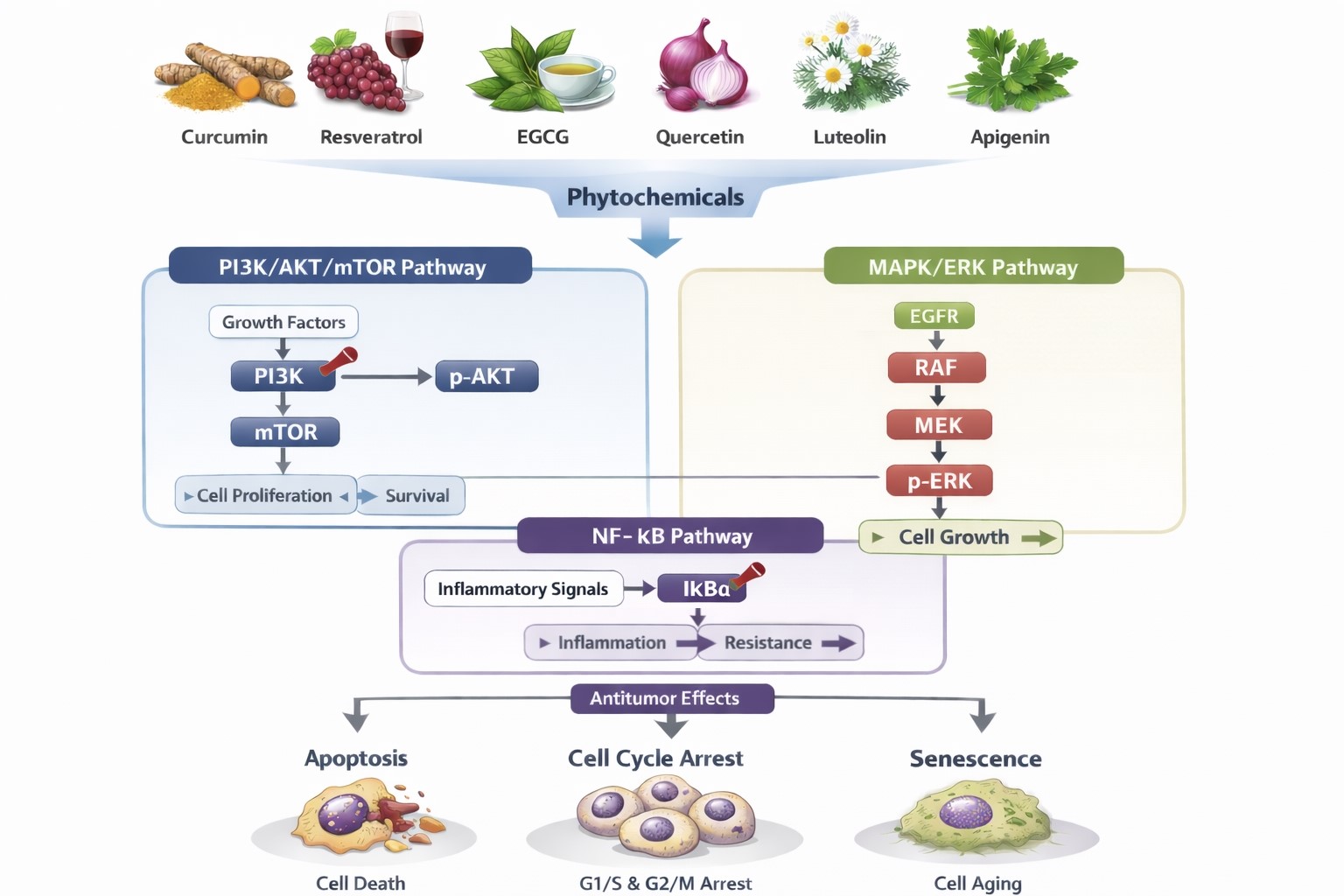
Head and neck cancer (HNC), predominantly represented by head and neck squamous cell carcinoma (HNSCC), remains a major global health challenge due to its high morbidity, mortality, and limited therapeutic efficacy of conventional treatments. Increasing evidence indicates that phytochemicals derived from natural sources exhibit significant antiproliferative activity and the ability to modulate key molecular pathways involved in tumor initiation, progression, and therapeutic resistance. This narrative integrative review critically synthesizes current evidence on the role of phytochemicals as modulators of programmed and non-programmed cell death pathways in HNSCC. Peer-reviewed studies retrieved from major international databases were analyzed to identify the main classes of phytochemicals investigated, their molecular mechanisms of action, and their potential therapeutic applications. The findings demonstrate that compounds such as curcumin, resveratrol, epigallocatechin-3-gallate, quercetin, luteolin, and apigenin exert pleiotropic effects by regulating critical signaling pathways, including PI3K/AKT/mTOR, MAPK/ERK, NF-κB, and STAT3, leading to cell cycle arrest, apoptosis induction, and attenuation of tumor invasiveness. Despite robust preclinical evidence, translational challenges persist, particularly related to low bioavailability, tumor heterogeneity, and the scarcity of well-designed clinical trials. Overall, phytochemicals emerge as promising adjuvant agents in the management of HNSCC, provided that future studies address pharmacokinetic limitations and strengthen clinical validation through translational and precision oncology approaches.